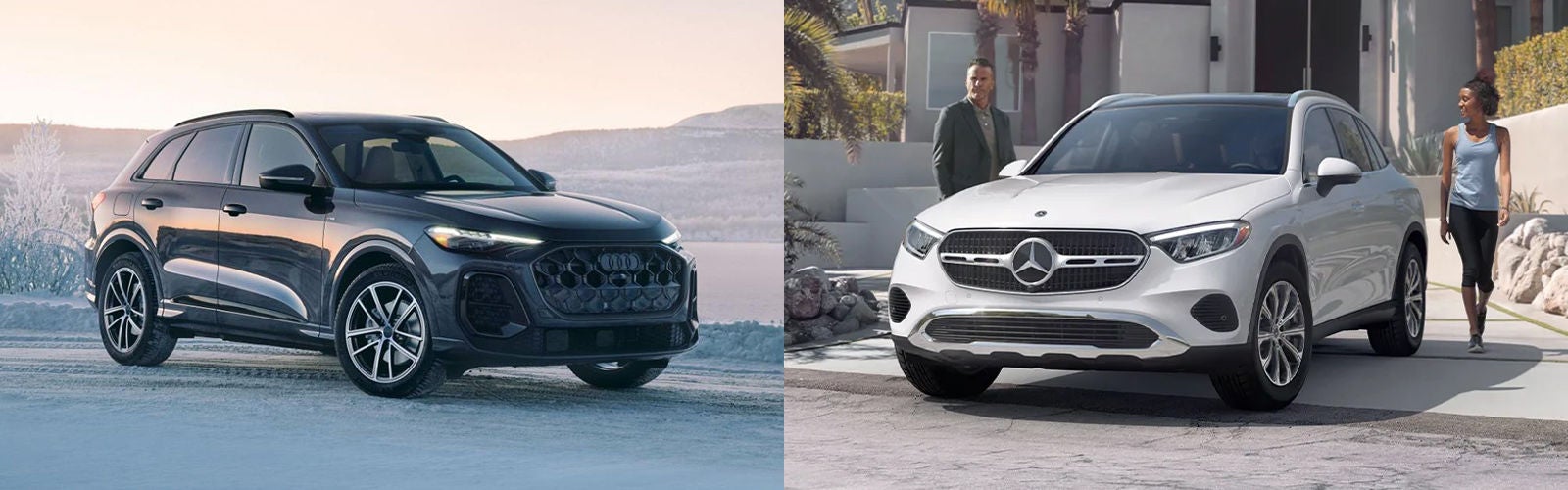
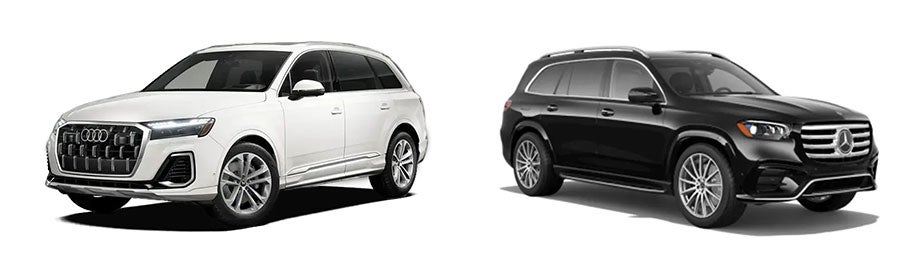
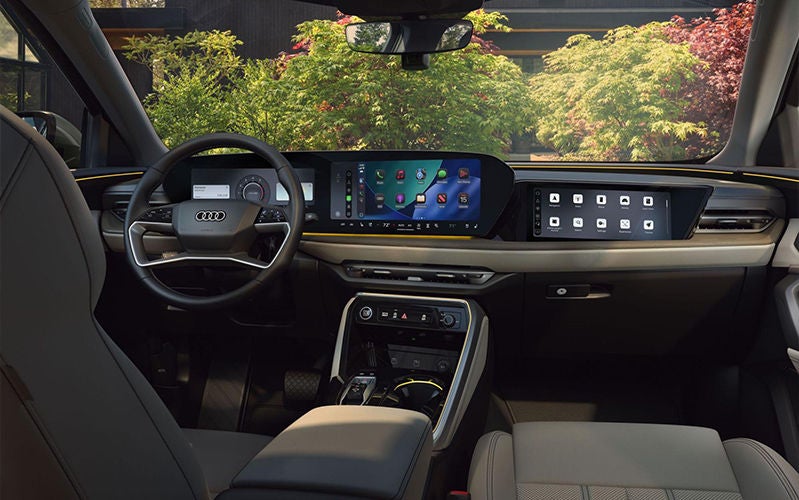
While both offer three-row seating for up to 7 passengers, there are several key distinctions between the Audi Q7 and the Volvo XC90. When comparing performance figures, the XC90 is no match for the Q7. Powered by a 3.0-liter V6 engine, the Q7 delivers a balanced yet responsive 335 horsepower and 369 lb-ft of torque. For comparison, the XC90 relies on a complex 2.0-liter 4-cylinder which is mated to a mild hybrid system.
Along with long-term reliability concerns, this engine is less powerful than the V6 found beneath the hood of the Q7. The fuel tank of the Q7 is 4 gallons larger than the XC90, leading to less-frequent stops on extended road trips thanks to greater range. Thanks to a shorter turning radius, the Audi Q7 is also the better choice when maneuvering in or out of a tight parking space.
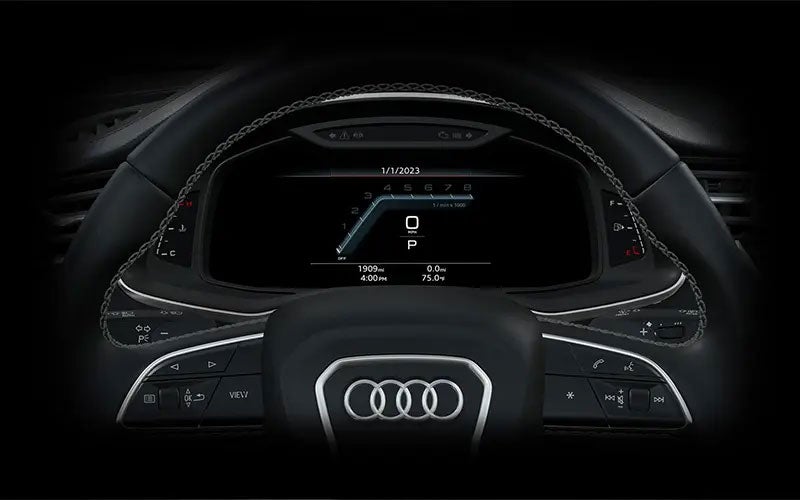
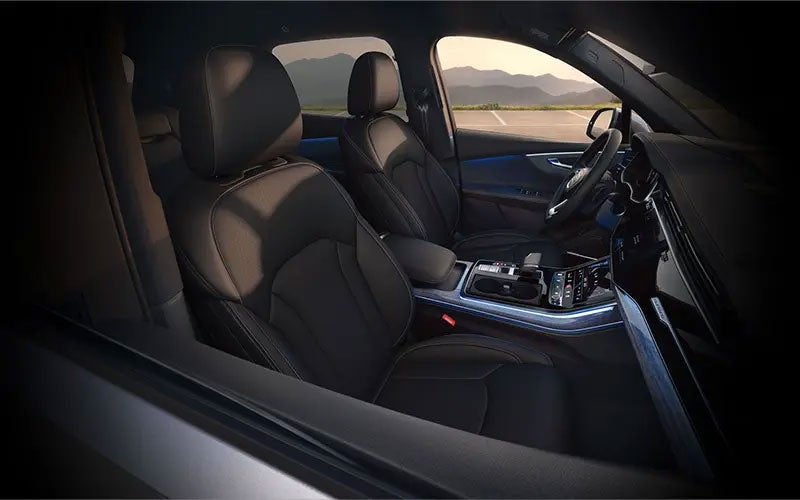
While Audi includes wireless Apple CarPlay and Android Auto smartphone integration for maximum convenience, Volvo does not offer any compatibility with Android devices. The steering wheel offers power tilt and telescoping adjustments for a personalized position inside the Q7. Volvo drivers will have to fumble with manual adjustments in order to reach their desired position. Across both the first and second rows of seating, the Audi Q7 offers more legroom and shoulder room than the XC90.